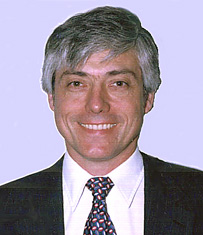
Today's Saipan Tribune has excerpts of an excellent Op-Ed piece by Leslie H. Gelb of the Council on Foreign Relations, writing for the Washington Post: "In the end, every President talks to the bad guys."
These verities of international relations, or any successful engagement of an opposing power, not only highlight the superiority of Barack Obama as the next President of the U.S., but also reveal lessons for us right here on the tiny islands of the Commonwealth.
"I have been charged by the president with making sure that none of the tyrannies in the world are negotiated with. We don't negotiate with evil; we defeat it." -- Vice President Dick Cheney, December 2003
Lil_hammerhead has hosted a lively discussion of just how stupid the 43rd POTUS is. Leslie Gelb tells us more. Posing the question of how do you deal with someone you believe to be evil, Gelb tells us simply: "You just can; it's done all the time." After citing examples from history's greatest (and less great) leaders, Gelb continues:
"Only President Bush messed up this simple, effective two-step approach to diplomacy. In 2002, he famously blasted Iraq, Iran and North Korea as "an axis of evil." (They were evil, though certainly not an axis.) But unlike Reagan, Bush virtually blocked his own future diplomatic path by making regime change his goal toward these evildoers, thereby slashing incentives for the devils to negotiate with him. Why should they negotiate if Bush's aim was to overthrow them? The policy made no sense, and sure enough, it didn't work. Bush did indeed go to war against Iraq, but he entered into direct negotiations with Pyongyang and eventually wound up holding ambassadorial-level talks with Iran about the present situation in Iraq. Those reversals made Bush, rather than the bad guys, look hypocritical."
Here's the nitty-gritty:
"The real issue is not whether to talk to the bad guys but how -- under which conditions, with which mix of pressure and conciliation, and with what degree of expectation that the bad guys will keep their word. When figuring out how to go about negotiating with devils, the questions [are] very basic."
Unfortunately, too many people miss this simple principle. The Cheney-Bush mentality, lodged in a very different part of the political spectrum, also exists right here in the CNMI and in the thought processes of overseas allies, thwarting progress toward goals and engendering missed opportunity.
Tuesday, May 6, 2008


Monday, May 5, 2008
Become An Obama Organizing Fellow
 The Obama campaign is looking for students and recent graduates to train in the basics of grassroots organizing and campaign fundamentals.
Obama Organizing Fellows will then be placed in a community to work for real change from the ground up.
This is a wonderful opportunity to be part of a new generation of leadership. Here's where you apply.
Wednesday, April 30, 2008
Thursday, March 27, 2008
Long-Term Resident Status and "Secrets" that Never Were
Middle Road has a March 22, 2008 post entitled, "Permanent residency for aliens courtesy of the CNMI gov't? Really now?" There has been much erroneous and misguided talk about this issue. Some of the recent promotion of negativism relative to the owngoing discussions is difficult to discuss charitably. There is a need for more clarity and perspective. Accordingly, I just posted a comment there and am reposting it here to be more readily and conveniently accessible to the public:
Get a grip, Weird Elle. There are far too many points for what little time I have, but here are a salient few.
One, there was nothing secret about the meeting. A meeting is not secret just because the media are not invited. If this meeting was "secret" then 99.9% of all meetings on the island are "secret." Truth is, the term "secret" got applied to this process only as a rhetorical device used by some to disparage the process because they were not participants and were not given a veto over what would be done or allowed to dictate what is in the best interest of workers and long-term alien residents of the CNMI.
Two, the people involved on the side of workers and long-term alien residents of the CNMI are all responsible individuals, chosen by the workers and long-term alien residents themselves to perform leadership roles. We are intimately familiar with the myriad details of exactly what aliens and workers in the CNMI face in the labor and immigration arena.
Three, we also know what the current "federalization" legislation will and will not do to meet the needs of workers and long-term alien residents. We harbor no illusions; neither are we deceived by specious legal analyses, threats of litigation, and other propaganda. We carefully evaluate the legal and political landscape.
Four, this process is not about the Fitial administration "granting" something to workers and long-term alien residents. It is not a government initiative. Legislators have specifically been excluded to date (that is, from the first two meetings), although that restriction no longer applies. Legislators were excluded in the initial stages to avoid the possibility of negative reactions before the concept had really formed any substance. There is so far no evidence whatsoever of the Governor endorsing any enhanced status. Indeed, I know that legislators who believe there should be action in this area are concerned about having a bill the Governor would be willing to sign.
Five, calling it "permanent residency" is confusing. That term is a lightening rod for uninformed negative reactions both in the CNMI and Washington, DC. We are very well aware of what the legal considerations are for any such proposal, and the processes available to address those considerations.
Six, the process is actually nothing more than an attempt to answer the question of what a meaningful reform addressing the legitimate concerns and interests of long-term alien residents and actually capable of becoming CNMI law would look like. Answering this question requires that all stakeholders have a place at the table.
Seven, Deanne Siemer requested a meeting with some of the Filipino leadership out of the Unity Movement core group. As the largest ethnic group of foreign national workers in the CNMI, Ms. Siemer believed this to be the best starting point for an attempt to build a consensus on how to address the status question locally.
Eight, local action and federalization are not mutually exclusive. This is especially true right now for two reasons: a) there is much the legislation presently before the U.S. Senate does not address, and b) even after the President signs the "federalization" bill, it will be a year to 18 months before the bulk of the law kicks in.
Nine, the interests of workers, long-term alien residents, businesses, locals, and the government also are not mutually exclusive. We all have some interests in common and some that are different. Consequently, it is possible through discussion to reach agreement on an approach to an issue that leaves us all better off than we would be otherwise.
Ten, there are many reasons for business, locals, and the government to want to reach common ground with workers and long-term alien residents of the CNMI. In short, doing so is in the best interest of the community -- the entire community we all share. That, supposedly, is what the Unity Movement is all about.
Eleven, in larger terms, workers and long-term alien residents have the stronger position at present. Their concerns have the attention of the U.S. Congress. Here in the CNMI, the Unity Movement has displayed a solidarity that did not previously exist. Federalization looms. Many businesses and politicians have shortsightedly fought against it. I have repeatedly said that we need to "cross the federalization hurdle" so we can all work together to make federalization work for the benefit of everyone in the CNMI. The present balance of power and political dynamic creates a unique opportunity. This process, which has just begun, has the potential to lead to the steps that make federalization work for the CNMI.
Twelve, "the other side," and specifically Deanne Siemer and Maya Kara, may still vigorously oppose federalization -- but as a practical matter, assuming they represent certain business and political interests and their own, they must prepare for that eventuality even if they insist it will never occur. Predictably, their course (based on the foregoing assumption) would pursue the outcome they believe best in the context of either eventuality.
Thirteen, the small group of Filipino leaders, drawn largely from the Dekada Movement, which has been at the forefront of the quest for improved status for long-term alien residents, agreed to meet with Deanne Siemer only with the presence of legal counsel and only a venue of their choosing (my conference room). When that first meeting took place, Ms. Siemer brought Ms. Kara along with her. Naturally, there was no reason to object because we are well aware of Ms. Kara's extensive connections with the Saipan Chamber of Commerce, the CNMI Bar Association, and many leading politicians and (principally past) public officials.
Fourteen, at that first meeting, we first listened to hear what Ms. Siemer and Ms. Kara had to say. We then locked in our concerns and challenged points on which we disagreed. The most important thing that happened at that meeting was the laying down of some ground rules for opening this dialogue, this conversation about status. Distinctly, there is much in common with the ground rules Tina Sablan laid down for her Commonwealth forums, e.g. no personal attacks, everyone gets to have a say, no media grandstanding. The most important rules were that the discussion is not about federalization, PL 15-108, or minimum wage. Our respective views on those topics are to be put off to the side and the discussion focused on the question of status under prospective local law. it was explicitly agreed that all sides are free to advocate their respective positions on these issues independent of this process and without affecting the process.
Fifteen, consequently, it should be very clear that we are pro-federalization and strongly advocating for federal action to fully address the status question and provide U.S. lawful permanent residence and a pathway to citizenship in appropriate cases -- consistent with the mandate in the present federalization bill. The present initiative is for the purpose of addressing current needs for reforms in CNMI law. Those needs exist and are morally and socially compelling regardless of federalization. Furthermore, the steps we take here have the potential to frame the implementation of federalization in a way that benefits all.
Sixteen, there is nothing new about this. The Dekada Movement was formed four years ago to seek improved status for long-term alien residents of the CNMI, not just by way of "green cards" under Federal auspices, but also through improved status under CNMI law. Moreover, CNMI political leaders as far back as 1994 or 1996 were openly considering the possibility of granting "permanent residency" to some class of alien workers (despite the existence of a peculiar constitutional provision that is part of the existing legal firmament that must be considered).
Seventeen, this process and the work Rep. Tina Sablan is doing are not either-or propositions. Each informs the other. In fact, many of us involved in this process had another "secret" meeting with Tina yesterday evening. Deanne Siemer also talks with Tina outside of these other meetings. I suppose those too are "secret" meetings.
Get a grip, Weird Elle. There are far too many points for what little time I have, but here are a salient few.
One, there was nothing secret about the meeting. A meeting is not secret just because the media are not invited. If this meeting was "secret" then 99.9% of all meetings on the island are "secret." Truth is, the term "secret" got applied to this process only as a rhetorical device used by some to disparage the process because they were not participants and were not given a veto over what would be done or allowed to dictate what is in the best interest of workers and long-term alien residents of the CNMI.
Two, the people involved on the side of workers and long-term alien residents of the CNMI are all responsible individuals, chosen by the workers and long-term alien residents themselves to perform leadership roles. We are intimately familiar with the myriad details of exactly what aliens and workers in the CNMI face in the labor and immigration arena.
Three, we also know what the current "federalization" legislation will and will not do to meet the needs of workers and long-term alien residents. We harbor no illusions; neither are we deceived by specious legal analyses, threats of litigation, and other propaganda. We carefully evaluate the legal and political landscape.
Four, this process is not about the Fitial administration "granting" something to workers and long-term alien residents. It is not a government initiative. Legislators have specifically been excluded to date (that is, from the first two meetings), although that restriction no longer applies. Legislators were excluded in the initial stages to avoid the possibility of negative reactions before the concept had really formed any substance. There is so far no evidence whatsoever of the Governor endorsing any enhanced status. Indeed, I know that legislators who believe there should be action in this area are concerned about having a bill the Governor would be willing to sign.
Five, calling it "permanent residency" is confusing. That term is a lightening rod for uninformed negative reactions both in the CNMI and Washington, DC. We are very well aware of what the legal considerations are for any such proposal, and the processes available to address those considerations.
Six, the process is actually nothing more than an attempt to answer the question of what a meaningful reform addressing the legitimate concerns and interests of long-term alien residents and actually capable of becoming CNMI law would look like. Answering this question requires that all stakeholders have a place at the table.
Seven, Deanne Siemer requested a meeting with some of the Filipino leadership out of the Unity Movement core group. As the largest ethnic group of foreign national workers in the CNMI, Ms. Siemer believed this to be the best starting point for an attempt to build a consensus on how to address the status question locally.
Eight, local action and federalization are not mutually exclusive. This is especially true right now for two reasons: a) there is much the legislation presently before the U.S. Senate does not address, and b) even after the President signs the "federalization" bill, it will be a year to 18 months before the bulk of the law kicks in.
Nine, the interests of workers, long-term alien residents, businesses, locals, and the government also are not mutually exclusive. We all have some interests in common and some that are different. Consequently, it is possible through discussion to reach agreement on an approach to an issue that leaves us all better off than we would be otherwise.
Ten, there are many reasons for business, locals, and the government to want to reach common ground with workers and long-term alien residents of the CNMI. In short, doing so is in the best interest of the community -- the entire community we all share. That, supposedly, is what the Unity Movement is all about.
Eleven, in larger terms, workers and long-term alien residents have the stronger position at present. Their concerns have the attention of the U.S. Congress. Here in the CNMI, the Unity Movement has displayed a solidarity that did not previously exist. Federalization looms. Many businesses and politicians have shortsightedly fought against it. I have repeatedly said that we need to "cross the federalization hurdle" so we can all work together to make federalization work for the benefit of everyone in the CNMI. The present balance of power and political dynamic creates a unique opportunity. This process, which has just begun, has the potential to lead to the steps that make federalization work for the CNMI.
Twelve, "the other side," and specifically Deanne Siemer and Maya Kara, may still vigorously oppose federalization -- but as a practical matter, assuming they represent certain business and political interests and their own, they must prepare for that eventuality even if they insist it will never occur. Predictably, their course (based on the foregoing assumption) would pursue the outcome they believe best in the context of either eventuality.
Thirteen, the small group of Filipino leaders, drawn largely from the Dekada Movement, which has been at the forefront of the quest for improved status for long-term alien residents, agreed to meet with Deanne Siemer only with the presence of legal counsel and only a venue of their choosing (my conference room). When that first meeting took place, Ms. Siemer brought Ms. Kara along with her. Naturally, there was no reason to object because we are well aware of Ms. Kara's extensive connections with the Saipan Chamber of Commerce, the CNMI Bar Association, and many leading politicians and (principally past) public officials.
Fourteen, at that first meeting, we first listened to hear what Ms. Siemer and Ms. Kara had to say. We then locked in our concerns and challenged points on which we disagreed. The most important thing that happened at that meeting was the laying down of some ground rules for opening this dialogue, this conversation about status. Distinctly, there is much in common with the ground rules Tina Sablan laid down for her Commonwealth forums, e.g. no personal attacks, everyone gets to have a say, no media grandstanding. The most important rules were that the discussion is not about federalization, PL 15-108, or minimum wage. Our respective views on those topics are to be put off to the side and the discussion focused on the question of status under prospective local law. it was explicitly agreed that all sides are free to advocate their respective positions on these issues independent of this process and without affecting the process.
Fifteen, consequently, it should be very clear that we are pro-federalization and strongly advocating for federal action to fully address the status question and provide U.S. lawful permanent residence and a pathway to citizenship in appropriate cases -- consistent with the mandate in the present federalization bill. The present initiative is for the purpose of addressing current needs for reforms in CNMI law. Those needs exist and are morally and socially compelling regardless of federalization. Furthermore, the steps we take here have the potential to frame the implementation of federalization in a way that benefits all.
Sixteen, there is nothing new about this. The Dekada Movement was formed four years ago to seek improved status for long-term alien residents of the CNMI, not just by way of "green cards" under Federal auspices, but also through improved status under CNMI law. Moreover, CNMI political leaders as far back as 1994 or 1996 were openly considering the possibility of granting "permanent residency" to some class of alien workers (despite the existence of a peculiar constitutional provision that is part of the existing legal firmament that must be considered).
Seventeen, this process and the work Rep. Tina Sablan is doing are not either-or propositions. Each informs the other. In fact, many of us involved in this process had another "secret" meeting with Tina yesterday evening. Deanne Siemer also talks with Tina outside of these other meetings. I suppose those too are "secret" meetings.
Wednesday, March 5, 2008
Monday, February 11, 2008
john.he.is
This is hilarious!
A new articulation of the McCain campaign theme ....
John "Bomb, bomb, bomb ... bomb Iran" He Is
Thursday, February 7, 2008
Misrepresentations and misinterpretations of H.R. 3070
If you've been reading the local papers about what Howard Willens has been saying about H.R. 3079 or federalization of immigration, you may have many questions.
The short answer to all these questions is Howard Willens is wrong. Workers, businesses, and the public need to look to more reliable sources for legal interpretation. Bill Wicker, Communications Director for the Senate Committeee on Energy and Natural Resources, recently addressed the subject. He concluded:
Look here for more information.
The short answer to all these questions is Howard Willens is wrong. Workers, businesses, and the public need to look to more reliable sources for legal interpretation. Bill Wicker, Communications Director for the Senate Committeee on Energy and Natural Resources, recently addressed the subject. He concluded:
It is unfortunate that ... there are those who misrepresent and misinterpret the U.S. government position in an effort to further delay reforms that are vital to the CNMI’s future.
Look here for more information.
Subscribe to:
Posts (Atom)